


Fun Facts for Silver: Surprising Things You Did Not Know
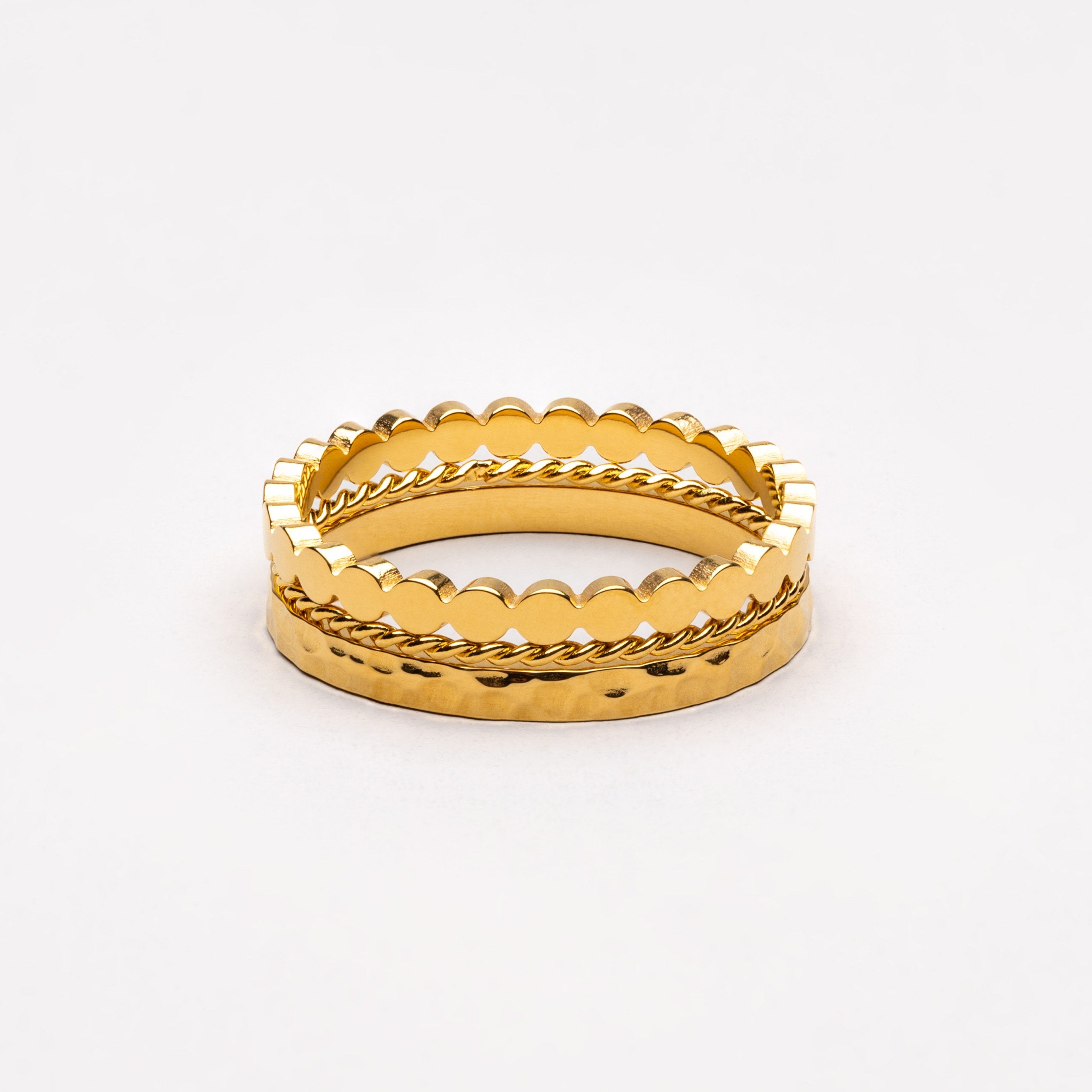
Exploring fun facts for silver reveals that this metal plays a role in everyday life far beyond jewelry. Silver reflects about 95% of visible light, conducts electricity better than copper (≈6.3×10⁷ S/m), and transfers heat extremely efficiently (≈430 W/m·K). Ancient civilizations used it as currency and even for early antimicrobial purposes. Silver halides once made film photography possible, while modern technologies—from touchscreens and circuit boards to solar panels—still rely on thin layers of silver. Its Ag⁺ ions can even destroy microbes on contact, which helps explain why silver remains valued both technologically and aesthetically—including in modern designs like the Silver Waterproof Jewelry collection.
What Makes Silver So Unusual?
Silver stands out because its atomic and electronic structure produces an uncommon combination of optical, electrical, and chemical properties. When you examine silver characteristics quantitatively, you see why it’s unusual. It reflects about 95% of visible light, giving it the highest optical reflectivity of any metal. Its electrical conductivity (6.30×10⁷ S/m) surpasses copper, making it the benchmark conductor.
You also notice unique properties in its thermal behavior: silver’s thermal conductivity (~430 W/m·K) efficiently spreads heat, critical in precision electronics. Its face-centered cubic lattice enables high ductility and malleability, so you can draw it into micron-scale wires or form ultra-thin films.
Chemically, silver resists oxidation in dry air yet readily forms surface compounds with sulfur and halides, enabling sensitive detection and catalytic interfaces.

Ancient Silver Facts: Money, Medicine, and Myths
Long before its modern electronic applications, this element functioned as hard currency, antimicrobial material, and ritual substance across early civilizations.
You’d recognize silver in standardized ingots and stamped coins: as ancient currency, it dominated trade from Mesopotamia to classical Greece, often fixed in weight units like the shekel or drachma. Archaeologists link major mining centers—Laurion in Greece, Rio Tinto in Iberia—to rapid urban and military expansion.
You also see silver’s ions used empirically as disinfectants; texts from Hippocrates onward note silver vessels keeping water and wine “fresher,” a qualitative observation of antimicrobial action.
Silver myths reinforced its special status: in Vedic, Greek, and later European traditions, you find silver tied to lunar deities, ritual purity, and protection against “corrupting” forces.
Silver’s Superpowers: Conductivity, Shine, and Reactivity
Those ancient roles in money, medicine, and myth all trace back to specific physical properties: exceptional electrical and thermal conductivity, intense optical reflectivity, and a distinctive pattern of chemical reactivity.
You’re dealing with the most conductive metal for electricity and heat: pure silver hits about 63 MS/m for electrical conductivity and ~430 W/m·K for thermal conductivity, outperforming copper and gold.
You also get unmatched visible-light reflectivity, often above 95% across much of the spectrum, which makes silver coatings ideal where you want maximum brightness and minimal signal loss.
Silver alloys let you tune hardness, tarnish resistance, and melting point while preserving much of that conduction and shine.
Silver’s moderate reactivity—especially with sulfur—creates tarnish but also underpins its antimicrobial action.

Shiny Science: Silver in Early Photography
While modern cameras rely on semiconductors, early photography was fundamentally a silver-based materials science experiment: image formation depended on the controlled light-induced transformation of silver halides such as silver chloride (AgCl), silver bromide (AgBr), and silver iodide (AgI) embedded in a thin film.
You’d recognize these as highly photosensitive silver compounds whose crystal lattices trap photoexcited electrons.
In early photographic processes, photons generated metallic silver nuclei inside individual grains. Subsequent chemical reactions during development amplified these nuclei into opaque silver clusters, creating density variations you perceive as image tones.
Historical techniques like the daguerreotype and calotype optimized grain size, halide composition, and binder matrices to control resolution, contrast, and exposure time, turning silver chemistry into a tunable, data-driven imaging system.
Everyday Tech That Quietly Runs on Silver
Even when you don’t see it, a surprising amount of everyday electronics depend on silver as a core functional material rather than decorative metal. You trigger silver every time you tap a touchscreen; transparent conductive films often use nano-scale silver networks for low resistance.
Your phone’s circuit boards rely on silver-based solders and silver alloys in connectors to minimize contact losses.
In your home, high‑reliability switches, relays, and wall outlets frequently contain silver contacts because silver’s conductivity (6.3×10^7 S/m) outperforms copper and gold-plated alternatives.
LED drivers, power inverters, and automotive control units all integrate silver applications in thick‑film pastes and conductive epoxies.
Even photovoltaic panels on rooftops print silver tracks to collect current, making silver a silent workhorse of modern electronics.
How Silver’s Antimicrobial Powers Protect Your Health
Long before it powered touchscreens and circuit boards, silver earned its value as a material that actively suppresses microbes on contact. When you expose bacteria to metallic silver, it releases Ag⁺ ions that bind to cell membranes, disrupt respiration, and damage DNA. Studies show over 99.9% reduction of common pathogens on silver-coated surfaces within hours.
You see these antimicrobial properties in wound dressings, catheters, and hospital door handles, where silver lowers bioburden and infection risk. In textiles, nanosilver reduces odor-causing bacteria, though regulators monitor nanoparticle release.
Water filters with silver-impregnated media inhibit microbial regrowth in stored water. By targeting multiple cellular pathways simultaneously, silver makes it harder for microbes to develop resistance, turning a precious metal into measurable health benefits for you.

Silver in Space, Solar Power, and Future Tech
Silver doesn’t just safeguard your health; it also underpins key aerospace and energy systems. You rely on silver’s top-tier electrical conductivity—6.30×10⁷ S/m—to move power efficiently through satellites, space stations, and launch vehicles.
Engineers specify silver alloys in connectors, circuit paths, and thermal interfaces because they resist oxidation and tolerate extreme temperature cycling.
When you look at high-efficiency solar panels, you’re also looking at silver. Each photovoltaic cell typically uses about 100–150 mg of silver in its contact grids, maximizing current extraction and minimizing resistive loss.
As demand for renewable power rises, so does the search for “cosmic silver” applications: silver-based inks for printed electronics, plasmonic coatings for light trapping, and advanced battery chemistries that boost energy density for future electric aircraft.
How to Spot and Care for Real Silver at Home
At home, you can distinguish genuine silver by its measurable properties and predictable reactions.
Check hallmarks: “925,” “800,” or “Sterling” indicate standardized silver authenticity. Use a magnet; real silver shows negligible magnetic attraction. Measure mass and dimensions, then compare calculated density to silver’s reference value of ~10.49 g/cm³.
For a quick chemical check, apply a drop of diluted nitric acid on an inconspicuous area; authentic silver usually yields a creamy white reaction product, while plated brass or zinc often turns green.
Avoid abrasive tests that remove material.
For silver storage, maintain low humidity (<50%), stable temperature, and limited sulfur exposure.
Use acid‑free tissue, airtight containers, or anti-tarnish strips to slow sulfide formation and preserve surface integrity.

Frequently Asked Questions
Can Silver Change Color Based on Your Mood or Body Chemistry?
No, silver itself doesn’t change color with your mood like mood rings. It tarnishes when your body chemistry—sulfur compounds, sweat pH, chloride ions—increases surface reactions, forming silver sulfide or silver chloride, darkening or dulling the metal.
Is Silver Safe to Eat in Decorative Cake Sprinkles?
Yes, you can safely eat regulated edible silver in decorative cake sprinkles. You must confirm it’s real silver (E174), food‑grade, uncontaminated, and used in minimal quantities strictly for decorative uses, not nutritional value.
Do Any Animals Naturally Collect or Use Silver in the Wild?
You won’t find animals deliberately collecting metallic silver in nature; documented animal behavior shows only incidental uptake of silver ions or nanoparticles via water, sediment, or prey, with no confirmed biological structures or behaviors specialized for silver utilization.
Can Silver Be Grown in a Lab Like Synthetic Diamonds?
You can’t grow silver like diamonds; lab created silver doesn’t form by lattice growth. Instead, synthetic silver production relies on electrorefining or chemical reduction of silver salts, yielding metallic silver identical to naturally mined material.
Is There Such a Thing as Naturally Occurring Black or Blue Silver?
Yes, you won’t find naturally black or blue elemental silver; instead, black silver origins arise from surface sulfides/oxides or nanostructuring, while blue silver properties result from thin-film interference, alloying, or specific oxide-layer thicknesses altering light absorption.
Conclusion
You’ve seen silver as currency, catalyst, conductor, and microbe‑killer—all rooted in quantifiable properties: highest electrical conductivity (6.30×10⁷ S/m), strong reflectivity (~95% in visible light), and broad‑spectrum antimicrobial action at ppm levels. As you handle sterling (92.5% Ag) or inspect hallmarks (e.g., “925”), you’re working with a material that underpins photovoltaics, electronics, medical coatings, and space hardware—where atomic‑scale structure translates directly into real‑world performance.
















コメントを書く
このサイトはhCaptchaによって保護されており、hCaptchaプライバシーポリシーおよび利用規約が適用されます。